

A very common joke in Italy says that ‘the typical dish of Milan is sushi’. In reality, Milan and Lombardy have a solid culinary tradition, mainly made up of dishes that originate from a poor cuisine and readily available foodstuffs, even during the war.
The truth is that Milan has been welcoming immigrants from all over Italy and the world for decades. And as in all cosmopolitan cities of the world, everyone has brought their own traditions with them. So in Milan you can find excellent restaurants from every Italian region and from many countries. And yes, a lot of sushi, often Chinese-run: but that is a trend you can find in almost all of Europe.
Lombardy cuisine is one of Italy’s cuisines, but for those used to Italian restaurants abroad it is a surprise. It is a northern cuisine, where pasta is frequently replaced by rice, butter is more present than elsewhere (although extra virgin olive oil now prevails, also for health and dietary reasons!), and polenta plays an important role.
Let’s see what the typical Milanese dishes are and where to eat them.
Read also:
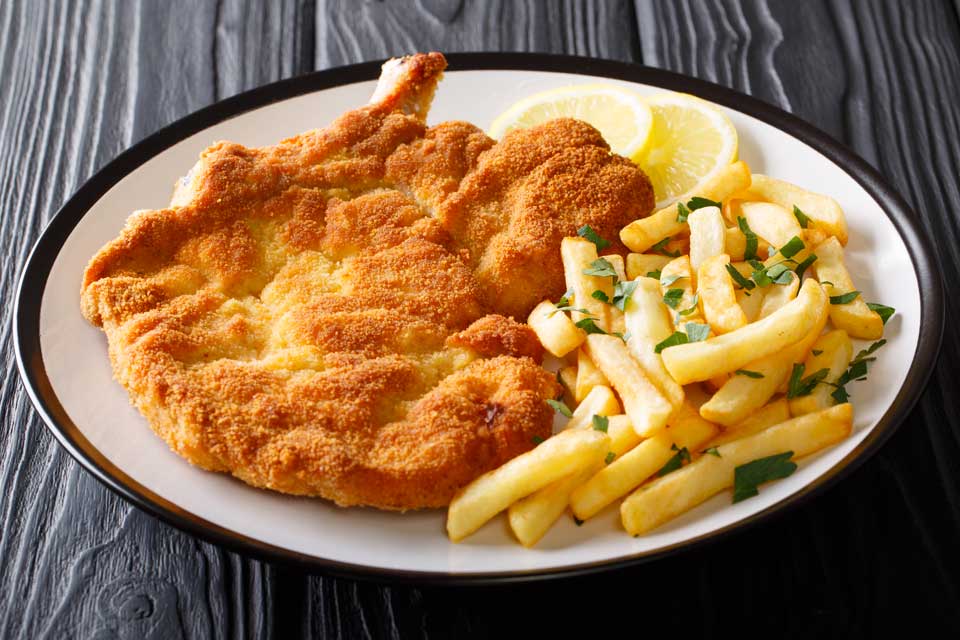
Cotoletta alla milanese
Cotoletta alla milanese is a slice of suckling veal loin, first dipped in beaten egg and then in breadcrumbs, trying to get the breadcrumbs to stick. The real “cotoletta alla milanese” is strictly with the bone, cooked in a pan and fried in clarified butter.
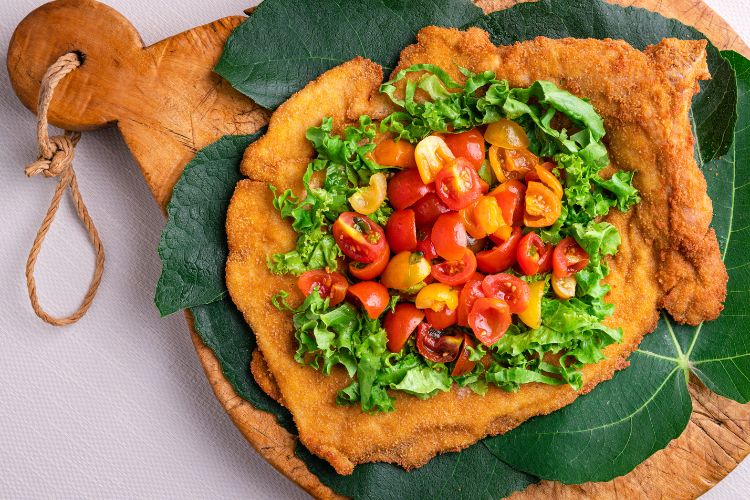
The “vestita” (literally, “dressed”) version of the cutlet involves a garnish placed on top of the cutlet, typically rocket, cherry tomatoes and parmesan cheese.
Purists will tell you that the schnitzel must be veal, friend in butter and definitely “not dressed”, but the advice is to try it and make your own opinion.
In many restaurants, even traditional ones, you can find variants of the schnitzel with pork (you recognise it because the bone is shorter and rounder), chicken (absolutely unacceptable for tradition) and adult beef (here the difference is less recognisable).
Risotto and Ossobuco
Risotto alla Milanese is another iconic dish of the city. A first course that, according to tradition, was created by a painter who wanted to surprise his guests by colouring the rice with saffron, a spice he used for his paintings.
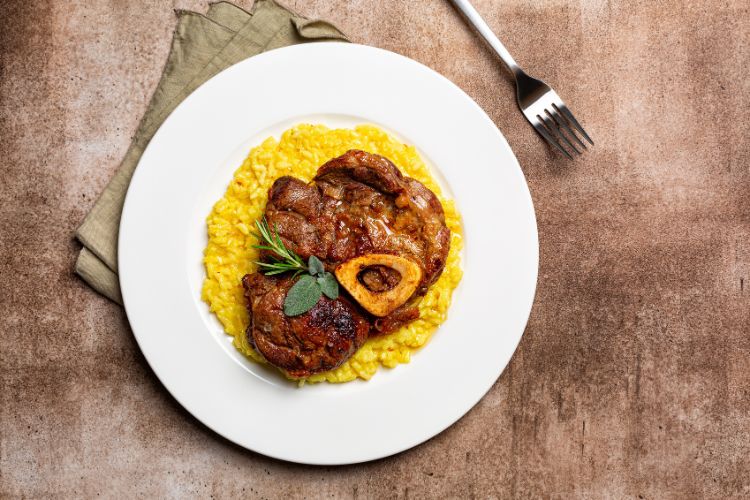
A good risotto alla milanese is prepared by wilting the onion and the marrow of the veal ossobuco in a pan with butter and oil, then adding the rice, toasting it and then deglazing it with white wine and cooking it by adding the meat stock as needed.
The risotto is then whipped with butter, parmesan cheese and saffron and served on the wave.
The osso buco (veal shank)
Veal ossobuco appeared in Milanese cookery books as early as the 18th century. And it is often served on a ‘bed’ of saffron risotto. The ossobuco is dredged in flour, seared in the sauté and then cooked for a long time in a pan with a little stock. At the end of cooking it is decorated with ‘gremolada’, a minced garlic, lemon zest and parsley.
The cassoeula
Cassoeula is a dish from Lombardy, made with pork scraps, those that the nobility did not eat. In a cassoeula we therefore find ribs, pork rinds, pig’s foot, ears and pig’s tail, to which are added verzini (typical small pork sausages) and lots of cabbage. The poor origin of the dish required the use of cabbage frozen from the cold of winter, which could not be served to the rich bourgeoisie but was used by the poor people.

Other dishes
Minestrone alla Milanese is a simple dish, made of vegetables: the ever-present Savoy cabbage, courgettes, carrots, celery, onions, potatoes, beans. And, again, lard and pork rinds. In the past, it was diluted with water to feed everyone. Today, it can warm us up in winter, perhaps by adding two slices of toast.
Among the typical Milanese dishes at risk of extinction are gnervitt (‘nervetti’ in Italian), which are the tendons of the calf’s knee or shin, cooked in water for two hours and then cleaned and dressed with onion and pickles.
Mondeghili, on the other hand, are meatballs made from leftover meat, especially from roast and boiled meat. The meat is minced and mixed with sausage, mortadella, grated grana cheese and stale bread soaked in milk. Meatballs are formed and then fried in butter.
Rustin negàa are veal knots (on the bone) dipped in flour and cooked in a pan with butter, diced bacon and a sprig of rosemary. Everything is doused with white wine, covered with broth and then left to evaporate, then baked in the oven at 160°C for an hour and a half.
More than just bread
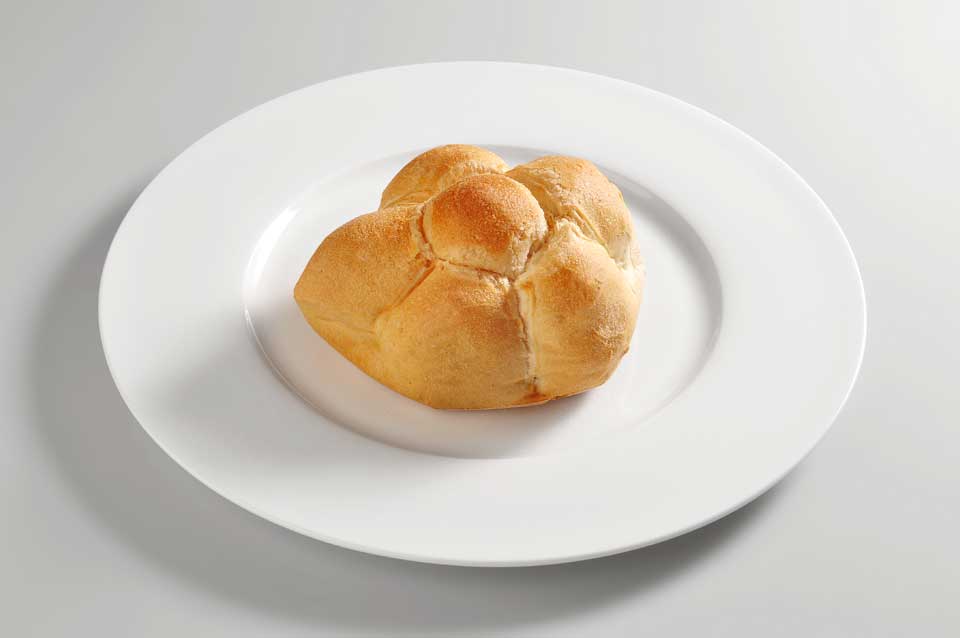
The michetta is the symbol sandwich of Milan. It is a ‘puffed’ sandwich, i.e. empty inside, prepared with a star or pentagon-shaped mould. Increasingly difficult to find in bakeries, it is an excellent choice for a quick sandwich filling, perhaps for a lunch on the fly while exploring the city. Or to eat on the flight home.
The typical desserts of Milan
Milanese cuisine does not have a long tradition of sweets, but two stand out: the legendary panettone and the Barbajada.
The Barbajada is a drink with chocolate, cream, and coffee that originated in the 19th century at the Caffè Cambiasi, which was located next to La Scala Theatre. It was a sweet created to refresh and warm the voice of the artists from the bitter cold of Milan, before the performance. An old-fashioned but nonetheless delicious drink.
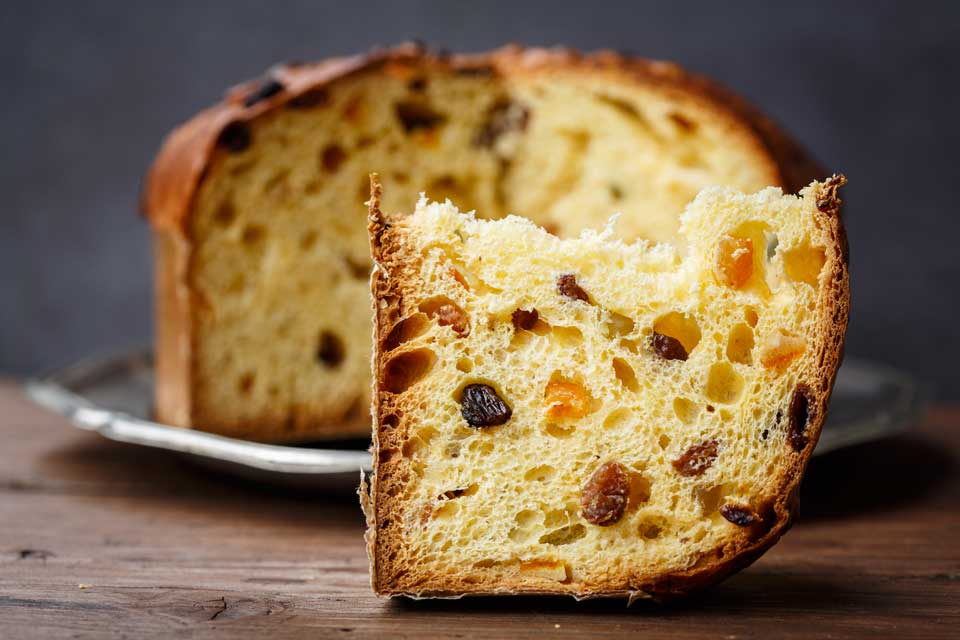
Panettone, famous also abroad, is Milan’s iconic Christmas cake: a sweet leavened pastry embellished with sultanas and candied fruit, whose name panettone derives from ‘pan di Toni’, a cake created by Ludovico il Moro’s kitchen boy on Christmas Eve to make up for the official dessert that had burnt.
Where to taste traditional Milanese food
All over Milan you will find restaurants offering Milanese dishes. But there is a risk of finding improvised or improvised dishes, such as chicken or pork schnitzel passed off as a ‘real cotoletta’.
So here are some of our favourite places to eat Milanese: if you have other restaurants to suggest, write to us. We’ll check them out.
Trattoria Arlati
Via Alberto Nota, 47 Reservations: thefork.it Telephone: 02 643 3327
Restaurant in the northern area, very popular. Milanese and non-Milanese dishes, extensive wine list, average prices.
Testina
Via Abbadesse 19 Booking: thefork.it wheno.it Telephone: 02 4035907
This restaurant in the northern part of the city offers a simple menu with some Milanese specialities. The wine list is extensive and includes Lombard labels that are not easy to find.
Al Garghet
Via Selvanesco, 36 Telephone: 02 534698
Just outside Milan, nestled in the meadows, a very atmospheric restaurant even if it has already been discovered by tourists of all nationalities. Schnitzel and more. It is essential to book well in advance.