


Milan has been a protagonist in many phases of Italian history. It was the capital of the Roman Empire for more than 100 years, as we recount best in the Tour of Roman Milan.
In the Middle Ages and the Modern Era, it was the capital of the Duchy of Milan, saw battles and armies, and was conquered and reconquered several times. In the Lombardy-Venetia Kingdom, Milan became a bourgeois, industrious and productive city.
But it was perhaps in the 20th century that Milan became an absolute protagonist in terms of business, culture and politics.
This tour of twentieth-century Milan offers you a series of places and insights into history. You can do it on foot or use the metro. We will also suggest some museums to delve into artistic currents in particular: consider them optional, of course.
We have chosen to focus on the part of the 20th century between the early post-war period and the 1960s. The crisis, the rise of fascism and the economic boom, in short. We will follow a geographical criterion, not a historical one: in other words, we will take a long walk and explain the places we encounter, we will not proceed in chronological order.
Piazza Velasca
We start with the Velasca Tower, also the star of our Tour of the Vertical Milan. Built in the 1950s, it was immediately the subject of heated debate as to whether it was ugly or not. Certainly, its architecture is unique and well represents the Italian attempt to find new stylistic paths after World War II.


Palazzo di Giustizia
From Piazza Velasca we take Via Larga, one of the busiest streets in the centre of Milan, and head for the Palazzo di Giustizia: built in 1932, it is an architectural example of ‘simplified neoclassicism’. Italians born before the 1980s will remember it for the live television broadcasts during the Mani Pulite (Clean Hands) investigation, which shook Italian politics in the early 1990s and marked the transition from the First to the Second Republic.
Off the beaten track, along the way you will pass the Sanctuary of San Bernardino alle Ossa: it is well worth taking a break to visit. It takes its name from the Ossuary, a room entirely decorated with skulls or bones.
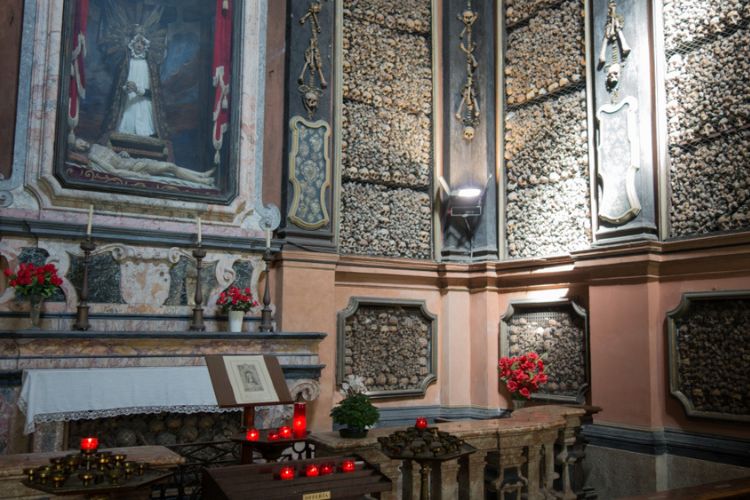
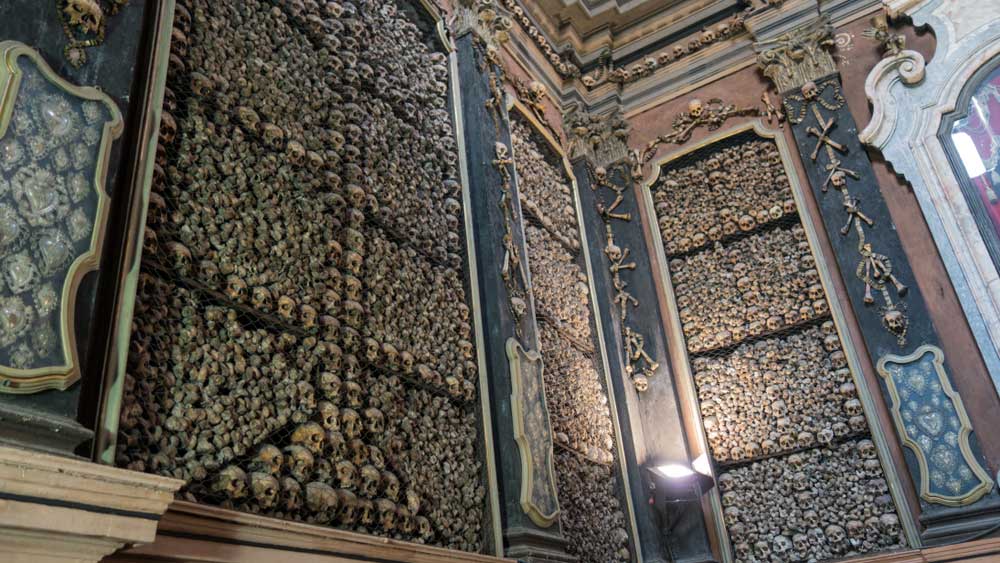
The Duomo Cathedral area
Head back towards the centre, setting the Duomo as your destination on Google Maps. On the way you will probably pass by Piazza Fontana. Here you will find a bank branch, where a terrible 1969 bombing attack took place. 17 people lost their lives. This event is considered by some historians to be the beginning of the ‘Anni di Piombo‘, a long period of terrorist attacks in Italy.
Continue towards Piazza del Duomo. Right next to the left side of the city cathedral is La Rinascente, Milan’s cult shopping centre, housed in a building rebuilt after a fire and opened in 1921. It is not only a shopping venue, but the symbol of Milan’s fashion industry, as well as a splendid example of the architecture of the time: just look at those arches!

To the right of the Duomo is the Palazzo dell’Arengario. Built between 1937 and 1956, it was the last building in the urban renewal project for the centre of Milan, which also included the redevelopment of the nearby Piazza Diaz.
You can peek into the Piazza to see some buildings from that period. Then head back to the Palazzo dell’Arengario. Here you will find the Museo del Novecento, the first artistic stop on our tour.
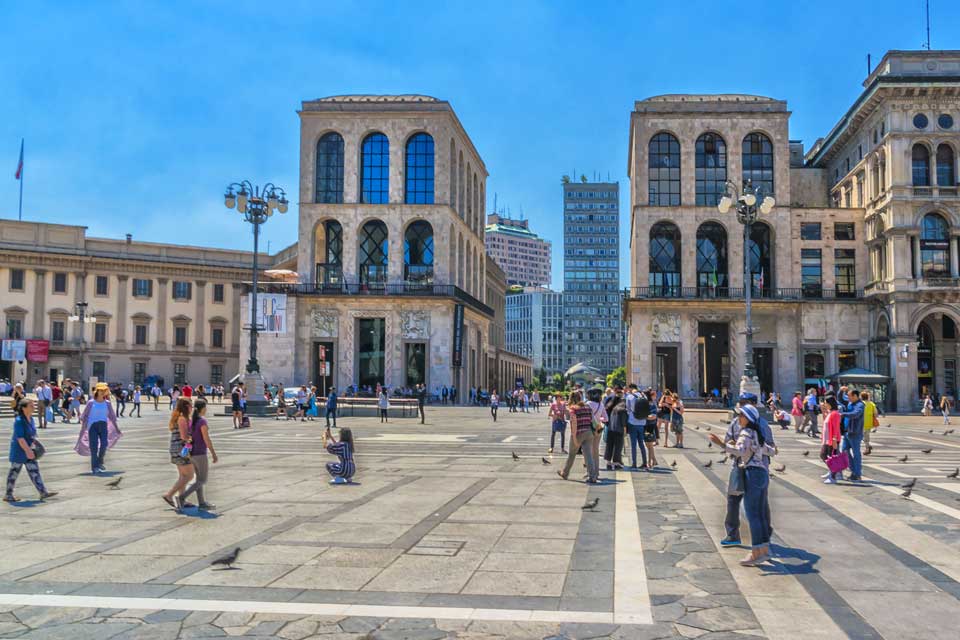
In this museum, you will find many works from the Italian 20th century period, including the artistic avant-gardes. The most famous is Futurism.
Palazzo Mezzanotte (Italian Stock Exchange)
When you are ready to move on, set your destination as Palazzo Mezzanotte, headquarters of the Italian Stock Exchange.
Google Maps will probably take you past Piazza San Sepolcro (this square is also featured on the tour of Roman Milan). It was here that Mussolini founded the Fasci Italiani di Combattimento in 1919: you are therefore in the birthplace of the fascism.
Continue on to Piazza Affari. In front of you is Palazzo Mezzanotte, named after the architect Paolo Mezzanotte, who designed it and directed its construction. The building’s façade is a perfect example of 20th-century style in architecture.
In front of the Stock Exchange is the obviously later sculpture L.O.V.E. by Maurizio Cattelan. The interpretation of the work leaves little doubt. The fact that it faces the headquarters of the Stock Exchange, then, is definitely indicative.

Nearby, you will find many impressive buildings from the 20th century period. Take a stroll to browse around. When you’re ready, walk or take the metro to the Porta Venezia MM1 Red Line stop.
Porta Venezia
We start from here to visit some places that tell a good story of 20th-century Milan.
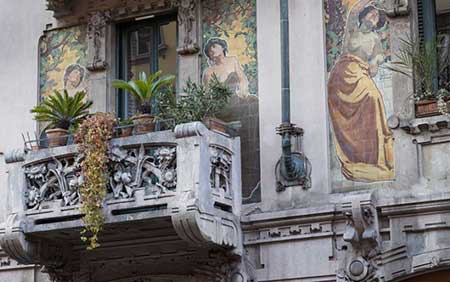
The first stop is at Via Malpighi 3: Casa Galimberti. This is an Art Nouveau building: it cannot be visited inside, but the façade is worth the visit. The Art Nouveau style was very popular in the early decades of the 20th century and gave Milan several beautiful buildings. Take a few more steps and, at number 12 Via Malpighi, you will find Casa Guazzoni, another example of an Art Nouveau façade.
Boschi di Stefano House Museum
Continue on to the Boschi Di Stefano House Museum: which can be visited free of charge and houses an amazing collection of paintings from the 1910s to the 1960s, with period furniture.
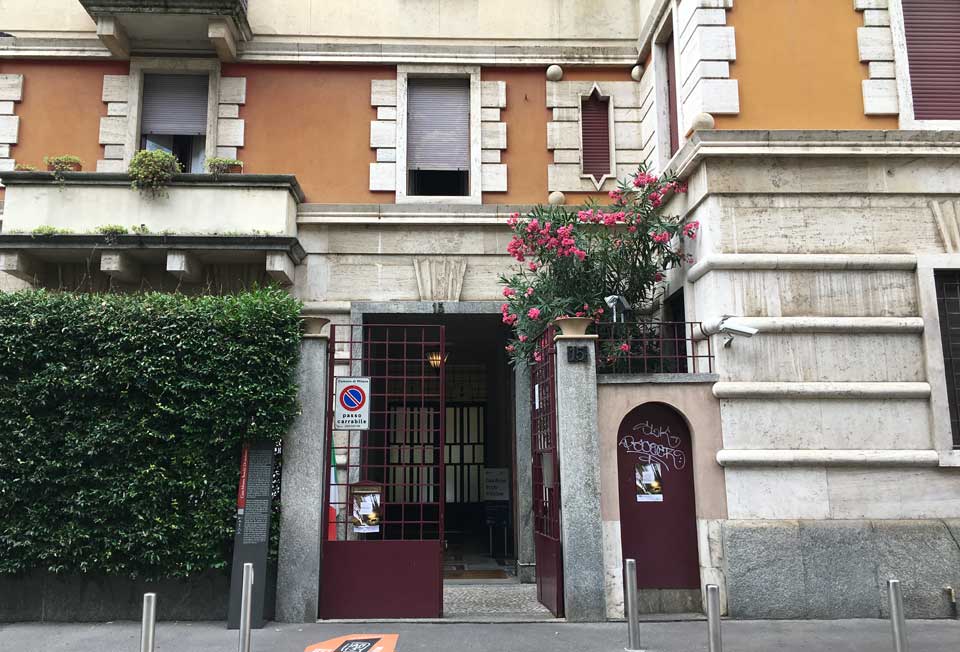
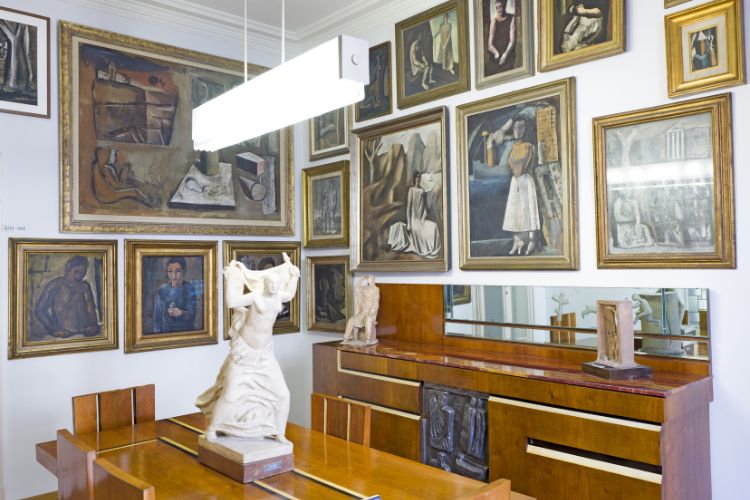
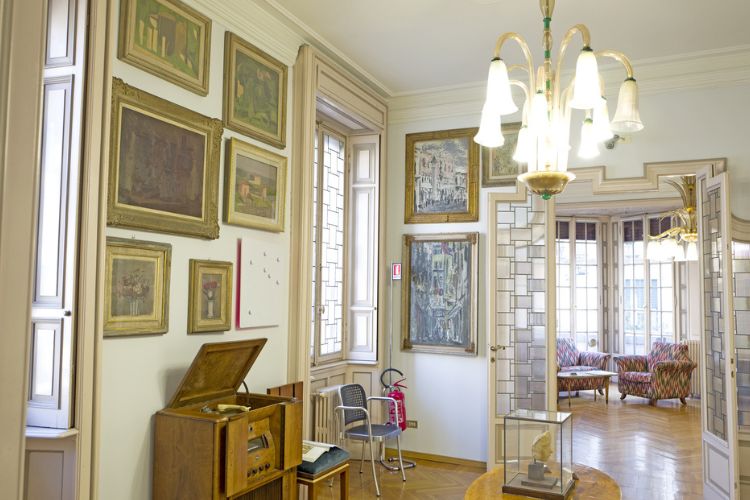
Allow at least 30/45 minutes for a non-superficial visit. The House Museum is run by volunteers from the Italian Touring Club. Ask them to tell you some anecdotes about the history of the house and its former owners.
Piazzale Loreto
Go ahead and walk down Corso Buenos Aires to Piazzale Loreto. You find yourself in a square full of traffic, objectively chaotic, not particularly beautiful and without tourist attractions. But there is a piece of history: the body of Benito Mussolini was displayed here in 1945, after his execution. Photos from that day show the corpse horribly exposed to the crowd near a petrol station, which is no longer there today. However, a journalistic reconstruction by the website Linkiesta has pinpointed the exact spot where Mussolini‘s body was hung. And it is where you see McDonald’s today.
We are ready to move on.
The Central Station – Stazione Centrale
Arriving at the Central Station forecourt, you see two symbols of Milan’s 20th century.


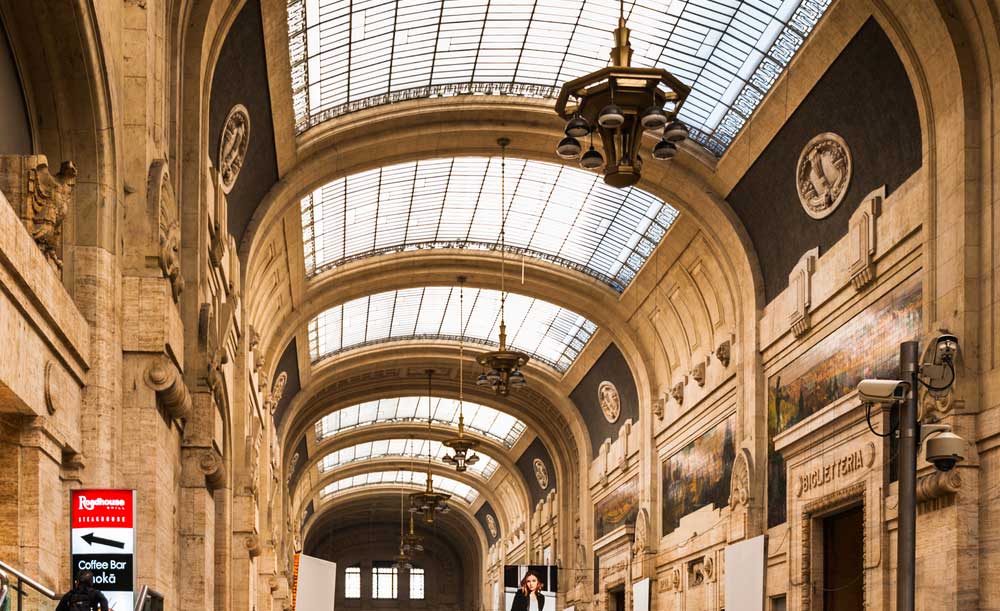
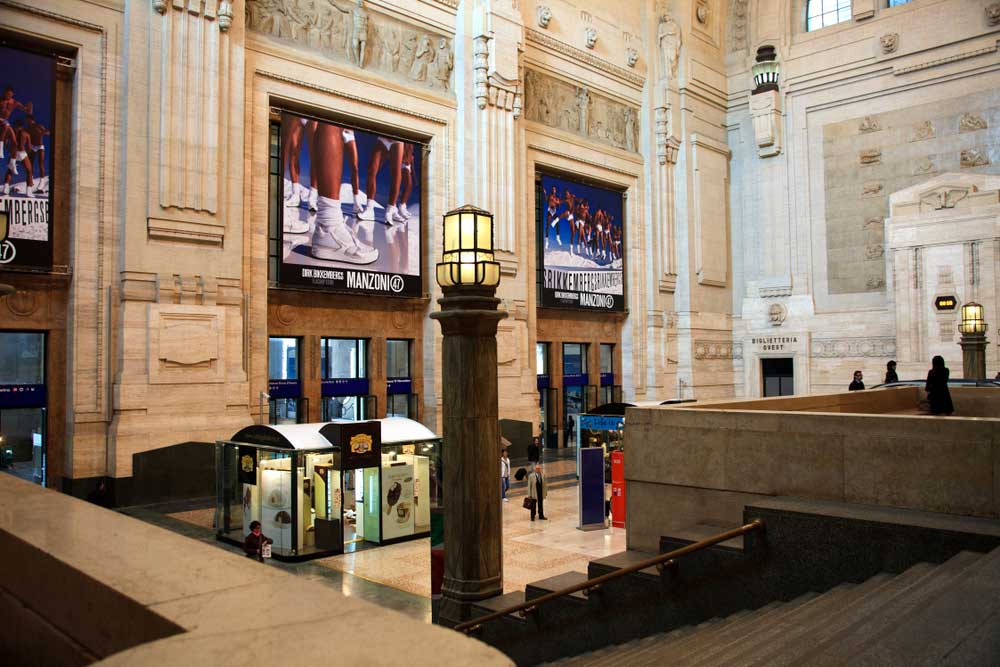
The Central Station is an example of monumental architecture from the Fascist period.
The Pirelli skyscraper, known as the Pirellone, is instead one of the symbols of Milan’s economic boom and reconstruction after World War II.