

Leonardo Da Vinci arrived in Milan in 1482 and stayed for 18 years. He was about 30 years of age and was seeking his fortune.
We have collected Leonardo Da Vinci’s places in Milan in this tour. Places where he worked or lived: some require a long visit, others only a few minutes.
The museums and monuments are not just about Leonardo, of course. As with all the other tours, you can go through the stages freely: in the order you want and choosing whether to go on foot or by metro.
Remember one key thing: the visit to the Last Supper must be booked online well in advance. Really. Do it.
Conca dell’Incoronata, also known as ‘Conca di Leonardo’.
We are in Via San Marco, a street in the centre of Milan. One of the Navigli once passed through here, and Da Vinci worked on a system to connect the Naviglio Martesana, coming from the north, to the city’s Navigli circle.
This was no small problem, because the Naviglio Martesana had a different height from the circle. A basin was therefore needed to solve the problem, allowing for smooth navigation.
The solution found was particularly ingenious, with a basin created at the end of the 15th century by Giuliano Guasconi and Bartolomeo della Valle, with the advice of Leonardo, who drew up the first plans as early as 1482.
The Brera Art Gallery
This museum houses two drawings by Leonardo da Vinci and a number of works by his followers, the best known of which are certainly Bernardino Luini and Cesare da Sesto. You can book your tickets here.
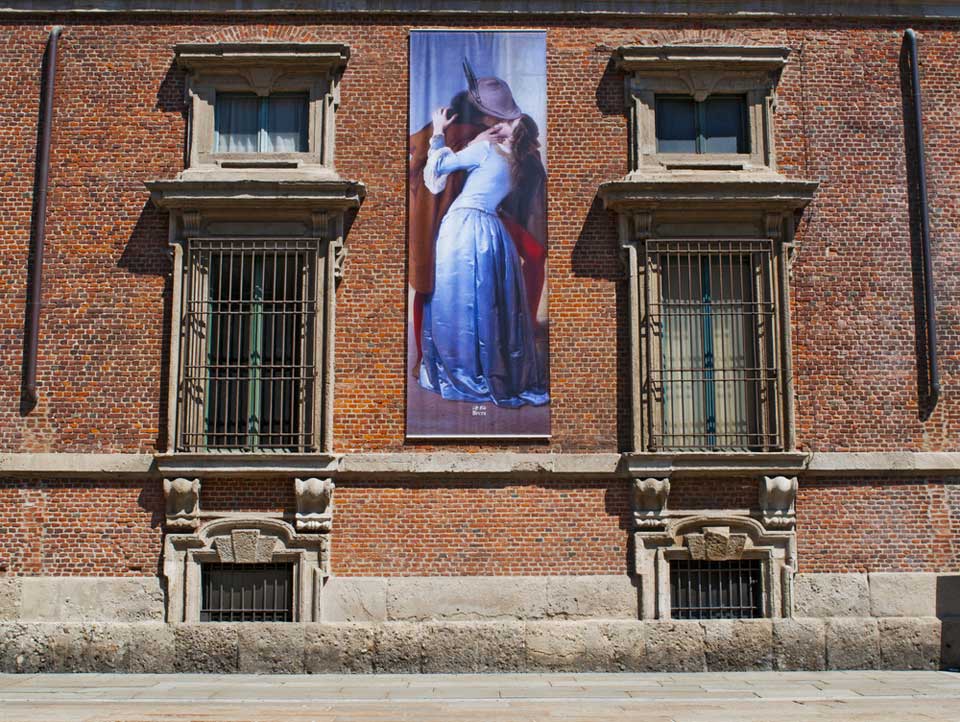
The Castello Sforzesco Castle
The rooms of the Museums housed in the Castle contain some works by Leonardo da Vinci.

The Castle’s Sala delle Asse has a vault with a large fresco by Da Vinci. In the Trivulziana Library, also inside the Castle, is the Codice Trivulziano, a collection of drawings and writings on military and religious themes.
In general, the Castello Sforzesco houses several museums and its rooms are worth a closer look. You can buy a ticket with a digital audio guide or a guided tour, including the sculpture Pietà Rondanini by Michelangelo.
Piazza della Scala

When you are done, exit and continue to Piazza della Scala, passing by the Duomo and the Galleria Vittorio Emanuele. Here stands the Monument to Leonardo Da Vinci, right in the centre of the square.
A few steps away is the Leonardo3 Museum (full admission 12 euros). This is an exhibition, which began as a temporary and then became permanent, of reconstructions of models and works by Leonardo. Interesting to understand the more technical aspects of his genius.
Biblioteca and Pinacoteca Ambrosiana
Access to the Pinacoteca Ambrosiana costs 15 euros, if you have no reductions (we recommend, as you know, the Abbonamento Musei). A complete visit of the museum takes at least an hour, given the large number of works present.
Several paintings were made by Leonardo’s disciples. If you want to point straight at him, in the Leonardi Hall there is the Portrait of a Musician, dated 1485. And in the last rooms you will find drawings from the Codex Atlanticus on display in rotation, in a truly impressive setting.
Last Supper (Basilica of Santa Maria delle Grazie)
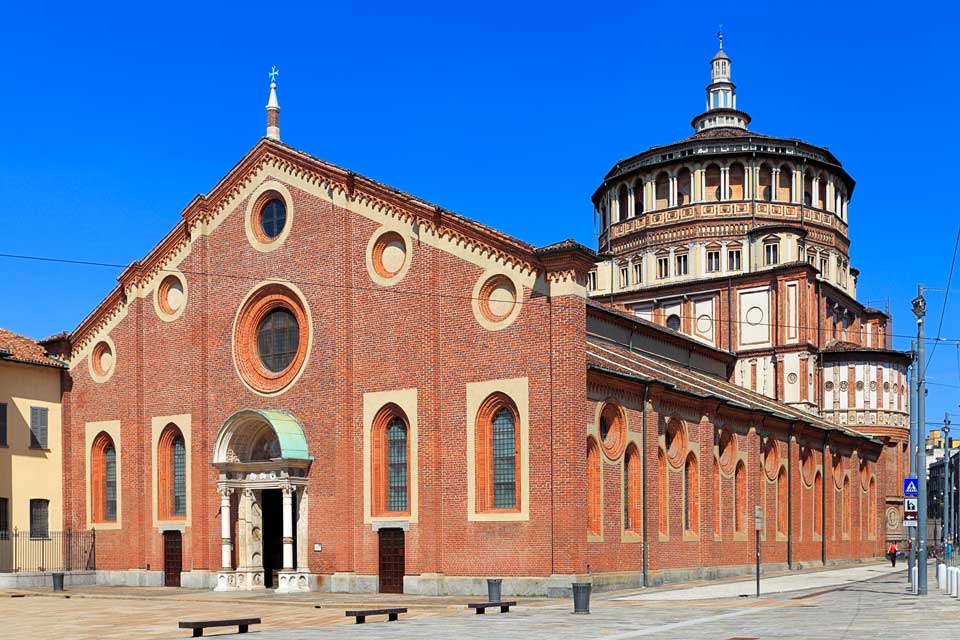
At the Basilica of Santa Maria delle Grazie one of Leonardo’s best-known works, which rivals the Mona Lisa, awaits you: the Last Supper, or Cenacolo.
The fresco is located inside an imposing basilica with a graceful interior. But most visitors ignore it, waiting to see the Last Supper.
I would like to remind you for the umpteenth time that booking the visit is compulsory and must be done online. The booking time must be strictly adhered to, by presenting yourself at the ticket office first.
You pass a quick security check and are ushered into the Upper Room, which is located on one of the walls. Don’t forget to also take a look at the fresco of the Crucifixion, on the opposite side, which completes the sense of the room’s decoration. It is a work by Donato Montorfano, designed specifically to confront the Last Supper: on the one hand, Jesus pledges to offer his material body for the remission of sins, and on the other he fulfils that commitment by dying on the cross.
You only have 15 minutes in that room, then they will let you out to make room for the next round of visits. Admission to the Cenacolo is not included in the Musei Lombardia season ticket.
Le Vigne di Leonardo
At the exit of the Cenacolo look across the street. There is Casa Atellani, which unfortunately can no longer be visited because it was bought by a private individual to build a hotel. It is a 15th century palace, historically interesting, with a peculiarity. In its garden was a vineyard, given by Ludovico il Moro, Duke of Milan, to our very own Leonardo Da Vinci. It was the year 1498 and Leonardo left Milan, which had just been conquered by the French, already the following year. In short, Leonardo’s vineyard is little more than a suggestion, but while you are in front of Casa Atellani, try to imagine Leonardo walking between the rows.
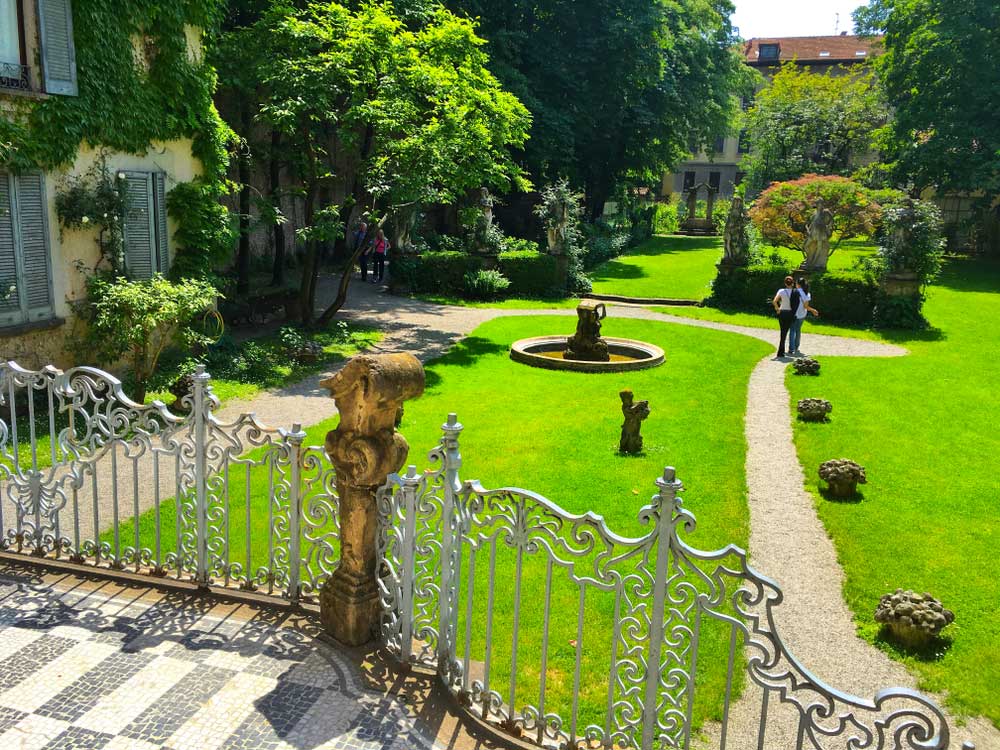
Milan Museum of Science and Technology
To whom could a Museum of Science and Technology be dedicated if not to Leonardo Da Vinci, who spent such significant years in this city? The museum is suitable for science enthusiasts rather than history buffs, but it also exhibits models based on Leonardo’s drawings and some of his designs.